
Guides
Permanent makeup removal & correction
If you are living with brows or lips that have gone too dark, turned the wrong colour, or were never quite the right shape, you are not stuck with them. Here is how correction and removal actually work, and how to tell which one you need.
At a glance
The essentials
Can old permanent makeup be fixed?
Almost always, yes. Old permanent makeup can be improved in one of two ways: by working over it with fresh pigment to correct the colour and shape, or by removing it first so you can start from a clean base. Which route is right depends on how dark the old work is, how much pigment is there, what colour it has faded to, and the shape you have been left with. Sometimes the answer is a bit of both.
Correction and cover-up work is one of Megan's specialisms, so whatever state your brows or lips are in, the first step is simply an honest assessment of what is possible.
Correcting and covering: working over existing ink
When the old work has faded enough and the shape is not too far off, it can often be improved by working over it. Fresh pigment is used to rebalance the colour, soften hard edges and bring the shape back into proportion.
The thing to understand is that old pigment does not disappear under new pigment. It sits beneath it and influences the final colour, so a brow that has healed to a cool grey or a warm orange needs colour-correcting pigments to neutralise that tone before a new shade will read true. A skilled artist plans for this rather than simply covering over the top.
Covering works beautifully when the canvas allows it. When the old work is very dark, heavy or sits well outside the shape you want, covering it risks a compromised result, and that is where removal comes in.
Often, protecting the final result means lifting the old work first rather than chasing it.
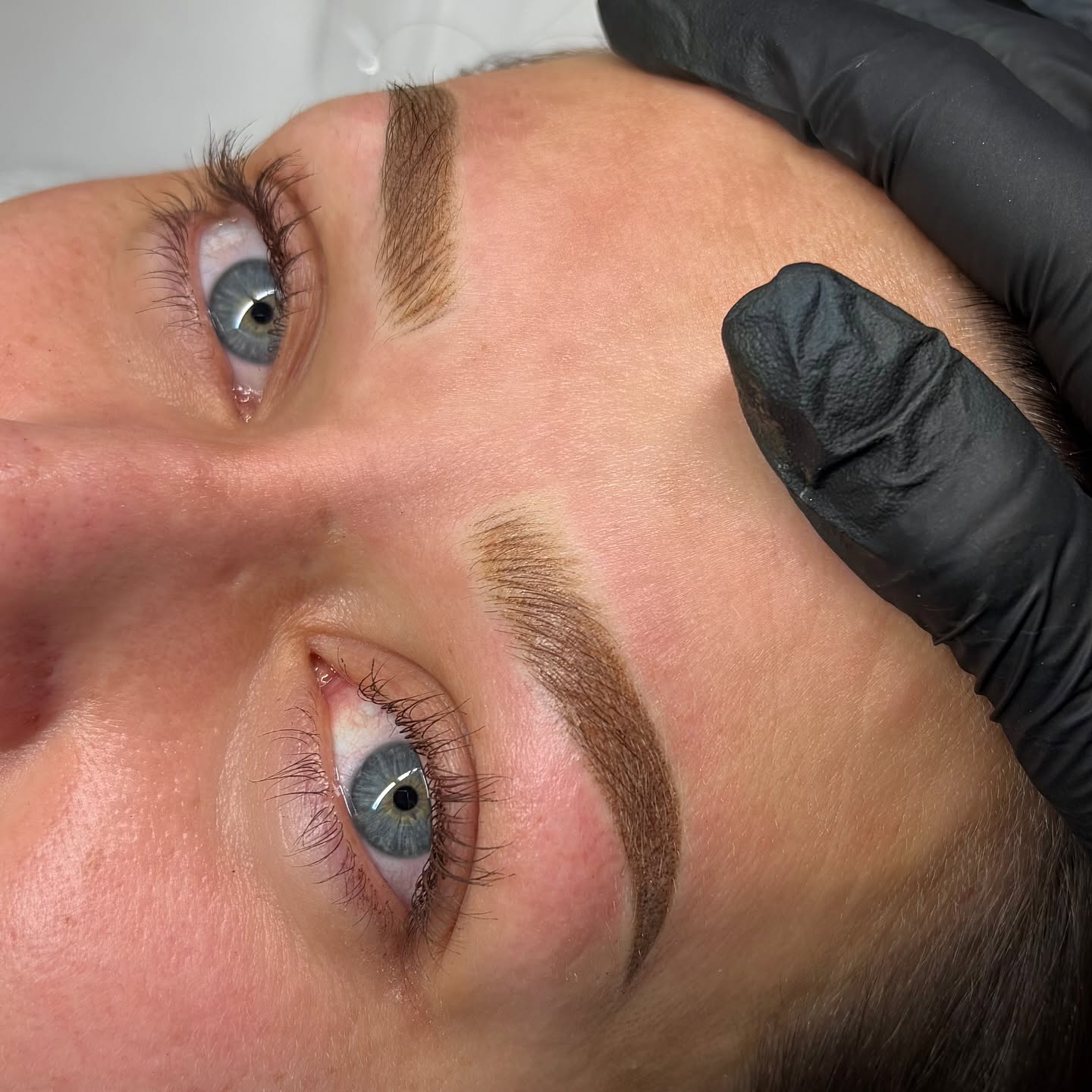
Removal: starting from a clean canvas
When the old permanent makeup is too dark, too large or the wrong shape to cover well, removing some or all of it first gives a far better foundation. It is not a failure or a drastic step. It is simply the route that protects your final result, and often the one that gets you to the look you actually want.
Megan offers two methods of removal, and the right one depends on your situation.
Laser and saline removal
Laser removal uses pulses of light to break the pigment into tiny particles that your body then clears away gradually. It works well on many pigments, though some colours need more sessions than others.
Saline removal works differently. A gentle salt-based solution is worked into the skin using the same technique as the tattoo itself, drawing the pigment up and out as the area heals. It can be a good option for areas and pigment colours that laser finds stubborn, and it avoids the colour shift that laser can occasionally cause in certain pigments.
Both usually need more than one session, spaced several weeks apart to let the skin recover. Which method suits you, and how many sessions you are likely to need, is something Megan assesses in person, because it depends on how much pigment is there, how deep it sits and what colour it is.
If your old work is microblading
Microblading deserves a special mention, because it is the most common reason people come in for correction. As it is done with a blade rather than a machine, it can heal patchy, blur or migrate over time, and it often fades to a cool or grey tone. Whether the answer is correcting over it or removing it first, the goal is the same: to replace it with a result that heals cleanly and lasts, which is exactly what machine work is designed to do.
Your free consultation
Because every case is different, the honest first step is a consultation, and at High Brow Society it is free, either in person or over a video call. Megan will look at what you have, tell you plainly whether covering or removing is the better route, and set out what is realistically achievable and how many sessions it might take.
Removal starts from £45. If you go on to have a fresh set, brows in any style are £310 and include the perfecting session that makes all the difference to how the final result heals.
There is no pressure and no obligation. Even if you are not sure you are a candidate for a cover-up, the consultation is there to give you a straight answer.
Questions
Removal & correction, answered
Anything else, just message Megan and ask.
Can you fix old or botched microblading?
Yes. It is one of the things Megan does most. Depending on the state of the old work, it is either corrected by working over it or removed first, and a free consultation is the best way to find out which.
Do I need removal, or can you just work over the old ink?
Sometimes the old work can simply be improved by working over it. If it is too dark, too heavy or the wrong shape, removing some or all of it first protects the final result. Your consultation will tell you which applies.
What is the difference between laser and saline removal?
Laser breaks the pigment down with light so your body can clear it. Saline lifts the pigment up and out of the skin using a salt-based solution and the tattooing process. Each suits different pigments and situations, and Megan offers both.
How many removal sessions will I need?
It varies with how much pigment is there, how deep it sits and what colour it is. You will get a realistic idea at your consultation rather than a guess upfront.
Does removal hurt?
Numbing is used throughout to keep you as comfortable as possible, just as it is during a treatment.
Begin
Let's get you back to brows
you actually love
Message Megan on WhatsApp to book your free consultation, or ask anything you are unsure about.